
Fifteen years ago, on a bitterly cold March afternoon, a tremendous 9.0 megathrust earthquake, the largest ever recorded in the country’s history, erupted in the Pacific Ocean, just 72 kilometers away from the Tohoku region of Japan. The ensuing tsunami that struck the coastlines of Miyagi, Iwate, and Fukushima Prefectures reduced many towns to rubble. Cars, trucks, and busses were swept away like toys. Massive fishing ships were dragged to shore. Countless lives were irrevocably upended in an instant.
The Tohoku earthquake and tsunami event of March 11, 2011, known in Japan as the Great East Japan Earthquake Disaster, remains one of the worst natural disasters to occur in modern times. But as the years go on, stories from that time shine above the destruction; stories of courage in the face of the unthinkable, of inspiring resilience, and of selfless acts of charity.
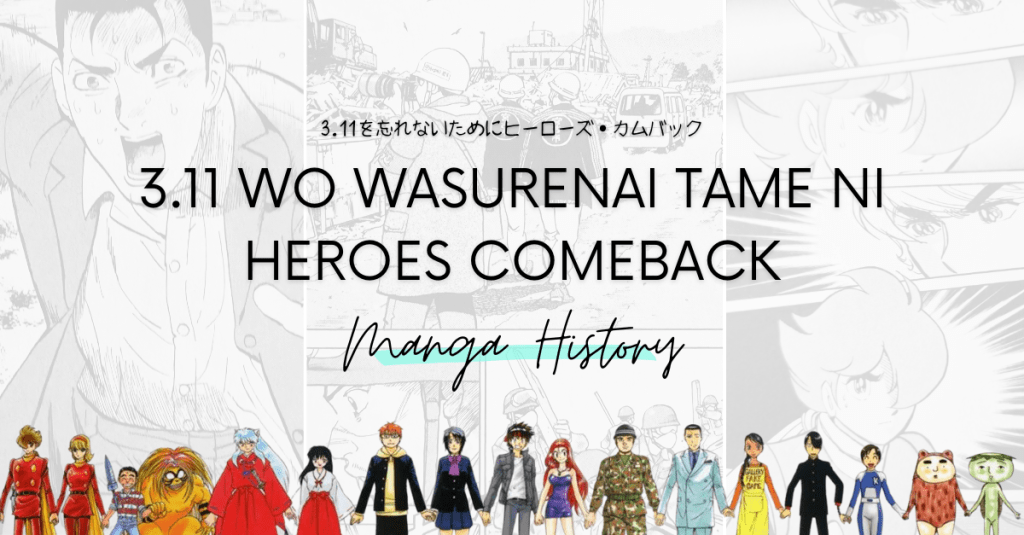
One such mission was 3.11 wo Wasurenai Tame ni Heroes Comeback (3.11を忘れないために ヒーローズ・カムバック), or “To Never Forget 3.11: Heroes Comeback”. This manga project was the creation of award-winning mangaka Fujihiko Hosono in collaboration with publisher Shogakukan.
In the immediate aftermath of the disaster, Hosono participated in charity work, signing autographs and donating books to help lift people’s spirits. But he felt more needed to be done. There needed to be a way to ensure people would never forget the tragedy.
Hosono believed that mangaka had a unique responsibility to draw help to the affected region—literally. He explained:
“Three months after the earthquake, I visited Ishinomaki City. Along the city’s streets, where the scars of the tsunami were still fresh, I found life-size figures of Ishinomori characters, including Kamen Rider and Kikaider. Apparently, these heroes had also been swept away by the tsunami and were covered in mud, but the people of the town had rescued them from the rubble, washed the mud off, and put them back in their original places.”
As a manga artist, I felt grateful, but at the same time, I felt a sense of unease, wondering if that was really the case. I felt that it would be ungrateful for us manga artists and our manga characters not to be the first to reach out to those affected by the disaster.”
So, Hosono put out a proposal to all manga artists to join his charity campaign. And eight prominent mangaka—Masami Yuki, Sensha Yoshida, Kazuhiko Shimamoto, Kazuhiro Fujita, Rumiko Takahashi, Hiromu Arakawa, Takashi Shiina, and Kaiji Kawaguchi—answered the call.
To participate in the Heroes Comeback project, each mangaka was tasked with writing a special one-shot manga short. All except one of the stories were spinoffs of existing series, most of which had already concluded at the time (hence the name “Heroes Comeback”). Shogakukan published the one-shots in several of their magazines between October 2012 and March 2013.
List of Works
Gallery Fake by Fujihiko Hosono
Kyūkyoku Choujin R by Masami Yuki
Utsurun Desu by Sensha Yoshida
Cyborg 009 by Kazuhiko Shimamoto
Hosono was especially grateful for this inclusion, having been originally inspired by the Ishinomori character statues.
Ushio and Tora by Kazuhiro Fujita
Inuyasha by Rumiko Takahashi
Silver Spoon by Hiromu Arakawa
Ghost Sweeper Mikami: Gokurakudaisakusen!! by Takashi Shiina
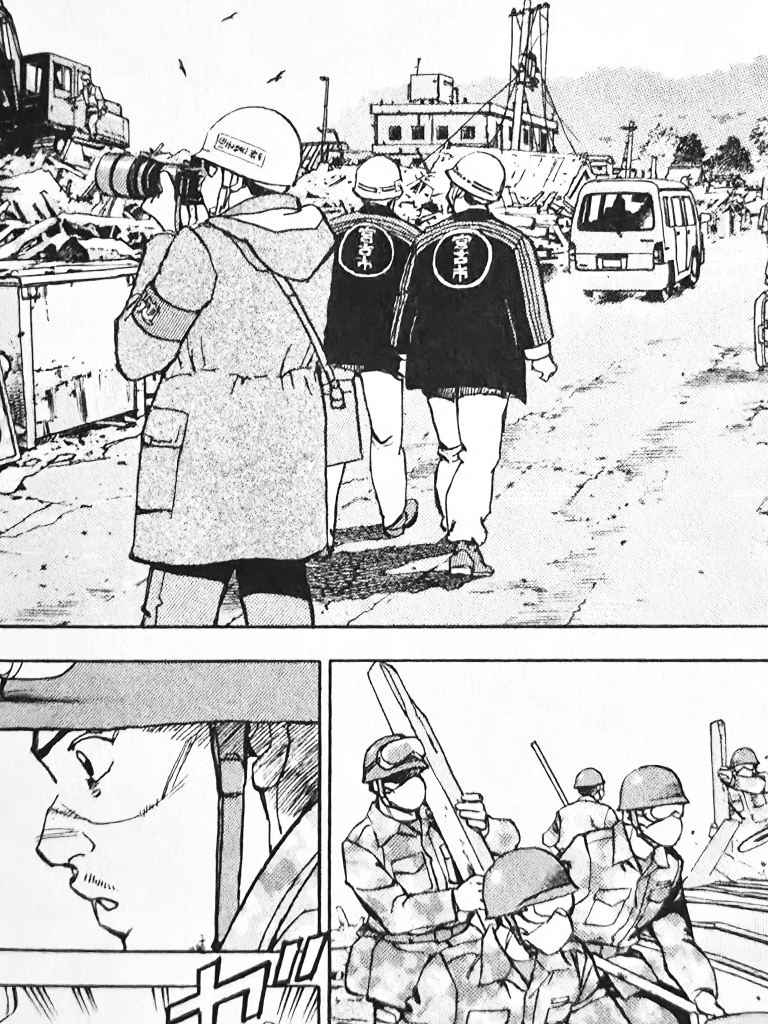
Ore Shika Inai ~Kuroi Nami wo Norikoete~ by Kaiji Kawaguchi
This was an original work centered around the Japan Self-Defense Forces and their rescue and recovery efforts during the disaster.
The Manga’s Impact
In April 2013, the manga were collected and published as an anthology, 3.11 wo Wasurenai Tame ni Heroes Comeback. Because the participating mangaka believed manga was mainly for children first, proceeds from the book were donated to scholarship funds for children orphaned by the disaster. These funds were distributed by the prefectural governments of Iwate, Miyagi, and Fukushima. By September of that year, the book raised ¥40 million in donations.
As another token of respect, every mangaka involved with the project donated autographed shikishi boards to the Ishinomori Mangattan Museum located in Ishinomaki, Miyagi Prefecture. The museum had suffered extensive damage from the disaster and was closed for repairs until November 2012.
On the 10th anniversary of the Great East Japan Earthquake Disaster in 2021, Shogakukan released Heroes Comeback online for free for a limited time in the hopes that even more people would read and remember the stories.
Keeping the Promise
Even today, the effects of the Tohoku earthquake and tsunami still linger, both in the landscape and the minds of those who lived through it. And while charity projects like 3.11 wo Wasurenai Tame ni Heroes Comeback have made significant impacts emotionally and financially, there is still much work to be done.
In April 2025, my husband and I revisited Minamisanriku in Miyagi Prefecture, one of the towns that suffered extreme loss during the disaster. The last time we were there was July 2012. Our schools had been selected to participate in the Kizuna Project, an international exchange program created by the Japanese government to promote Japan’s revival efforts in response to the disaster.
When we arrived back then, all that remained of the town were piles of rubble alongside remnants of foundations, destroyed cars, and shells of a few buildings that somehow survived the tsunami. Words alone can’t convey the sadness that emanated from the land.
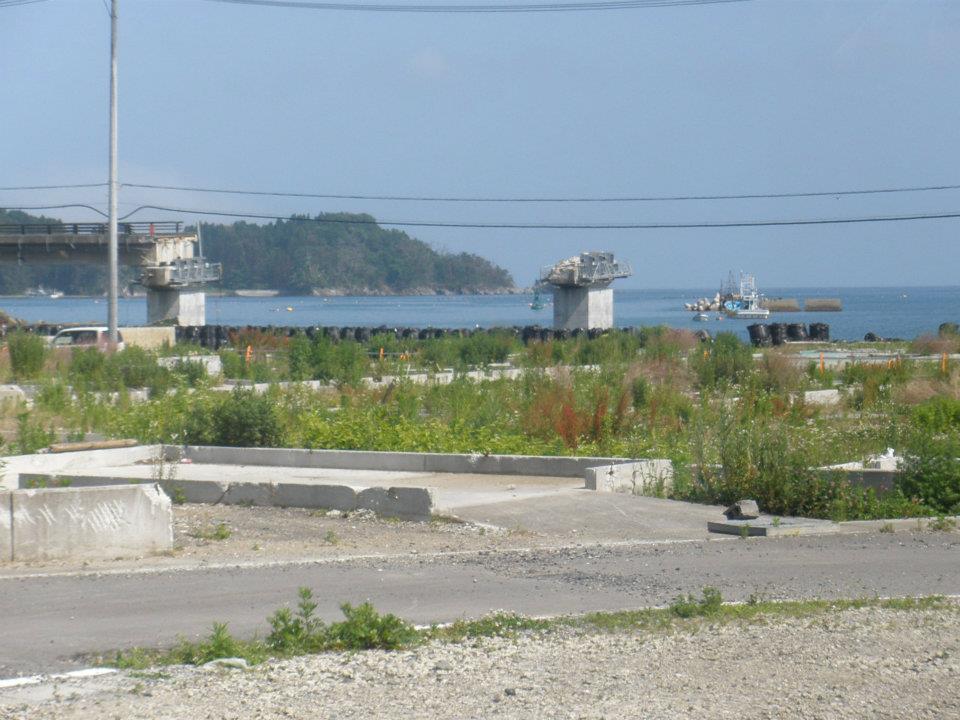
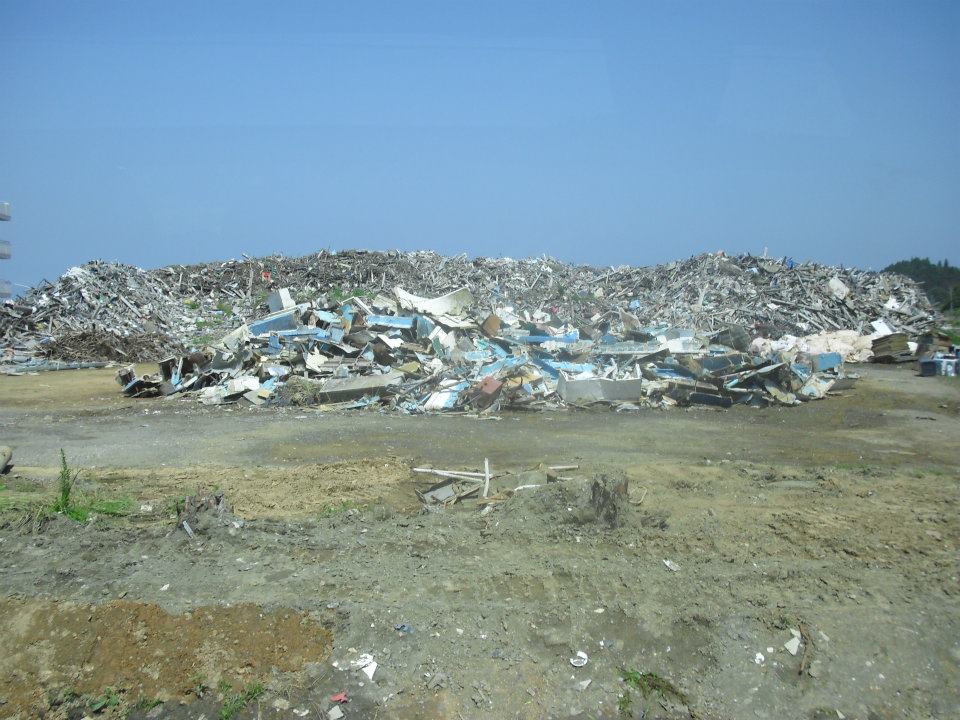
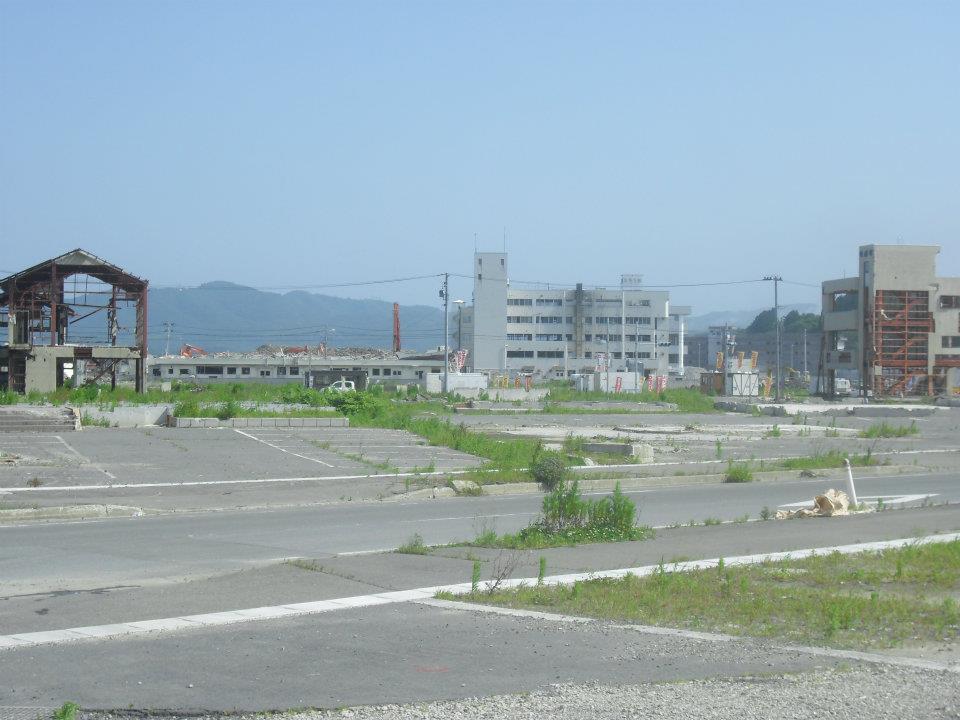
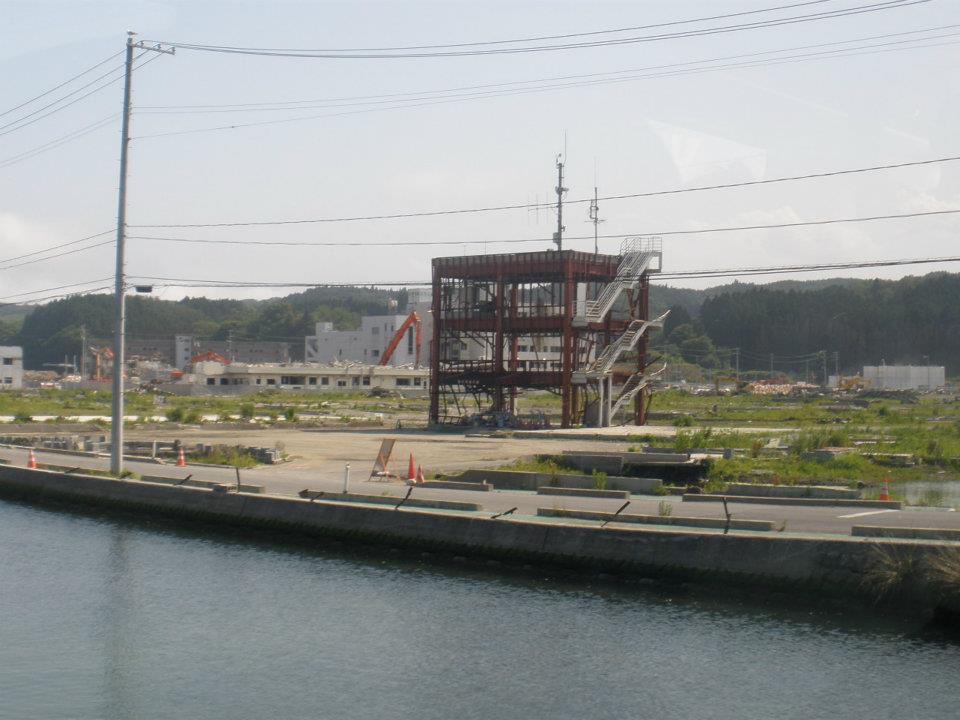
Despite everything, the citizens of Minamisanriku were more than welcoming. In between showing us the temporary shopping square and taking us to significant sites, including the now-famous Crisis Management Department building, they recalled their memories of that day. And while their stories were beyond tragic, there was an optimism shared among the citizens that yes, the town will survive this turmoil. And they were right.
Returning to Minamisanriku more than a decade later felt surreal. We took a tour with a new friend (who we later learned had his own story about 3.11), setting out from our hotel and heading into what used to be the center of town.
Gone were the debris and ruin. But instead of new homes and businesses that were originally planned, there was a sprawling field of green grass and paved walking paths.
It turns out, Minamisanriku was prohibited from rebuilding in the same area. The Japanese government determined that the land would always be at risk of tsunami disasters. All new housing construction must now be built well above sea level. The town can build only commercial structures on the old land.
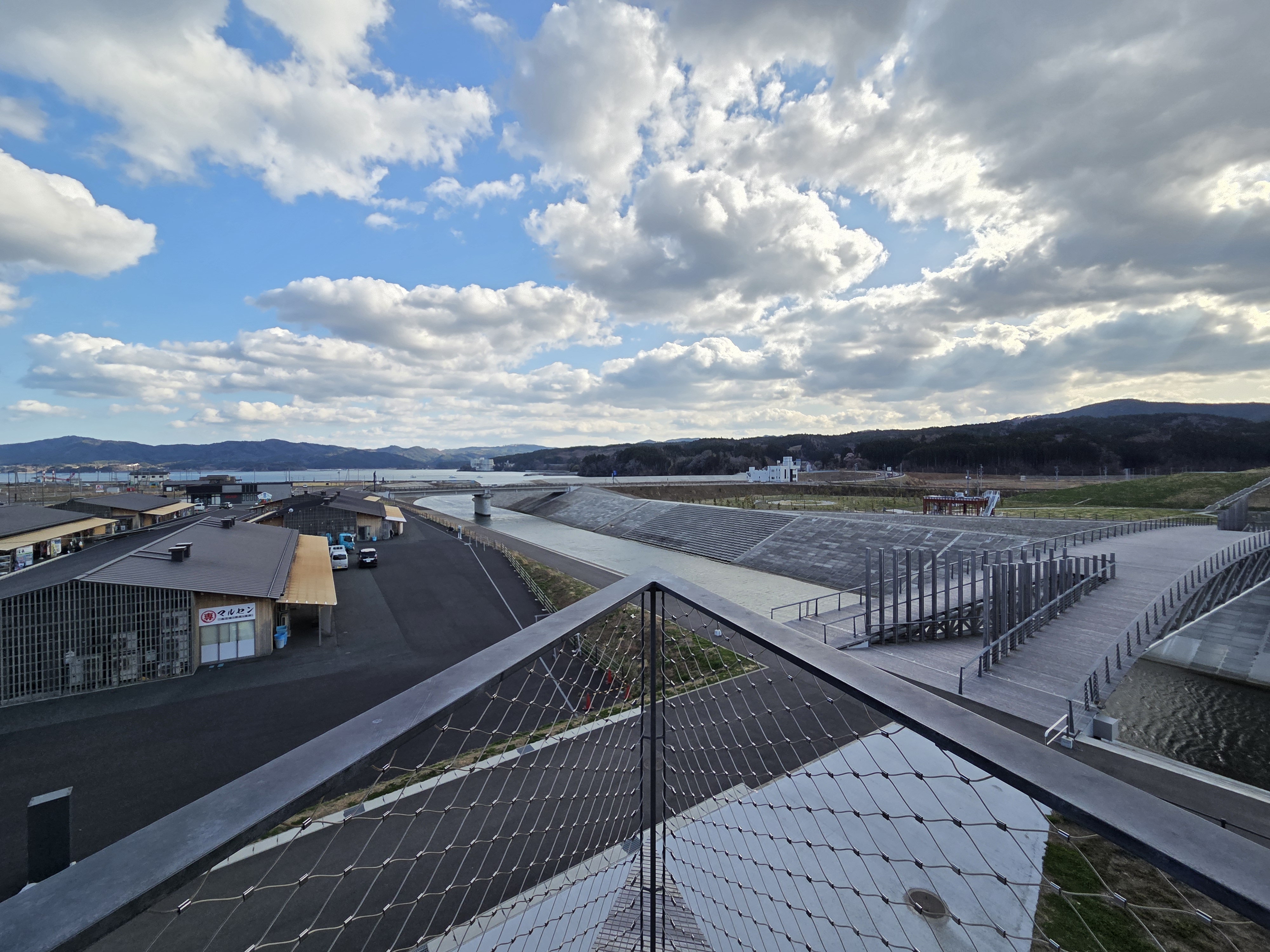
With these restrictions in place, Minamisanriku decided to transform the land into the beautiful Earthquake Reconstruction Memorial Park. Located near the Minamisanriku SanSan Shopping Street and the Minamisanriku 311 Memorial museum, the park is a place to reflect on the disaster, enshrine the memories of the people affected, learn about the importance of disaster preparedness, and celebrate the town’s future.
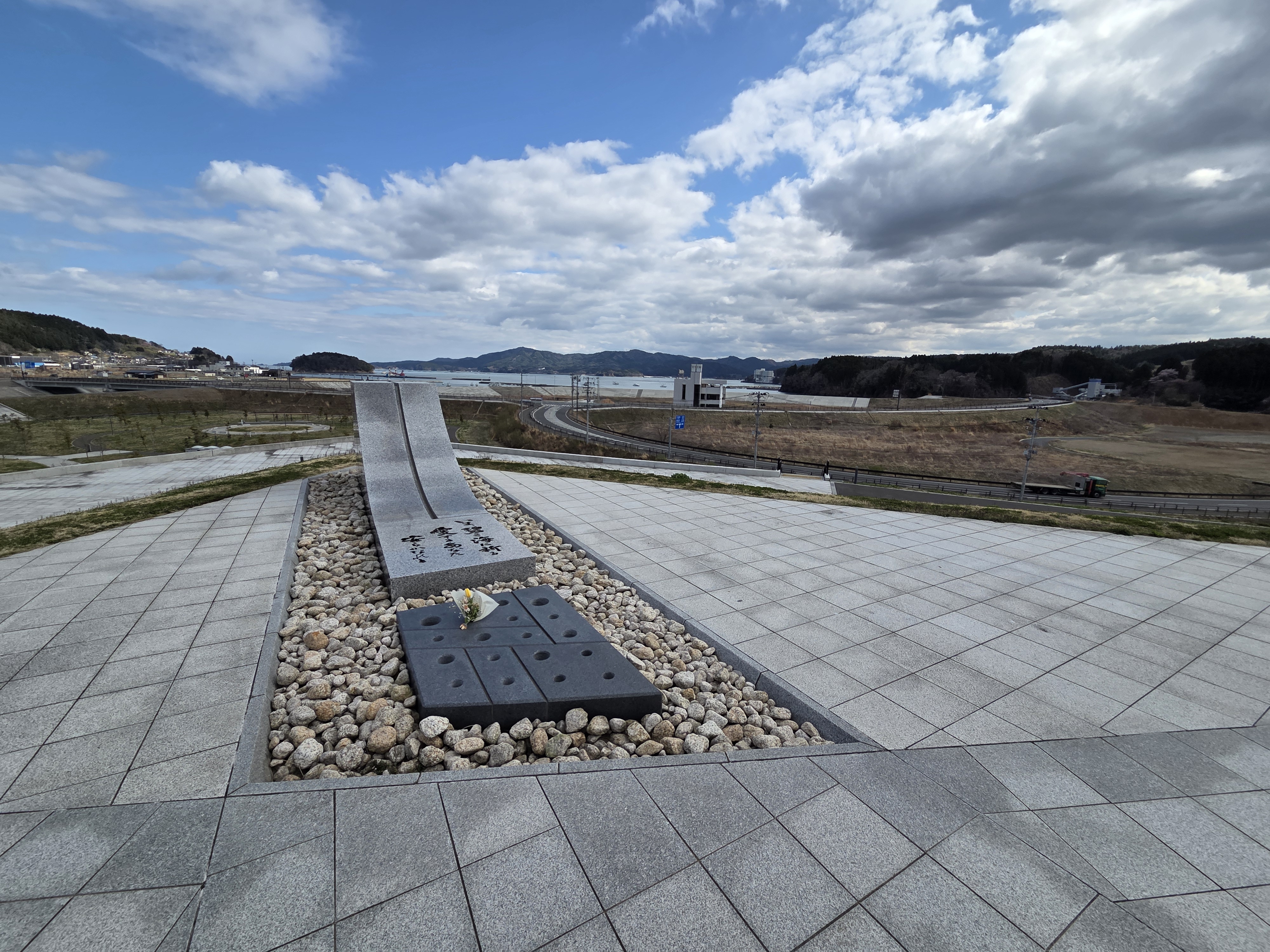
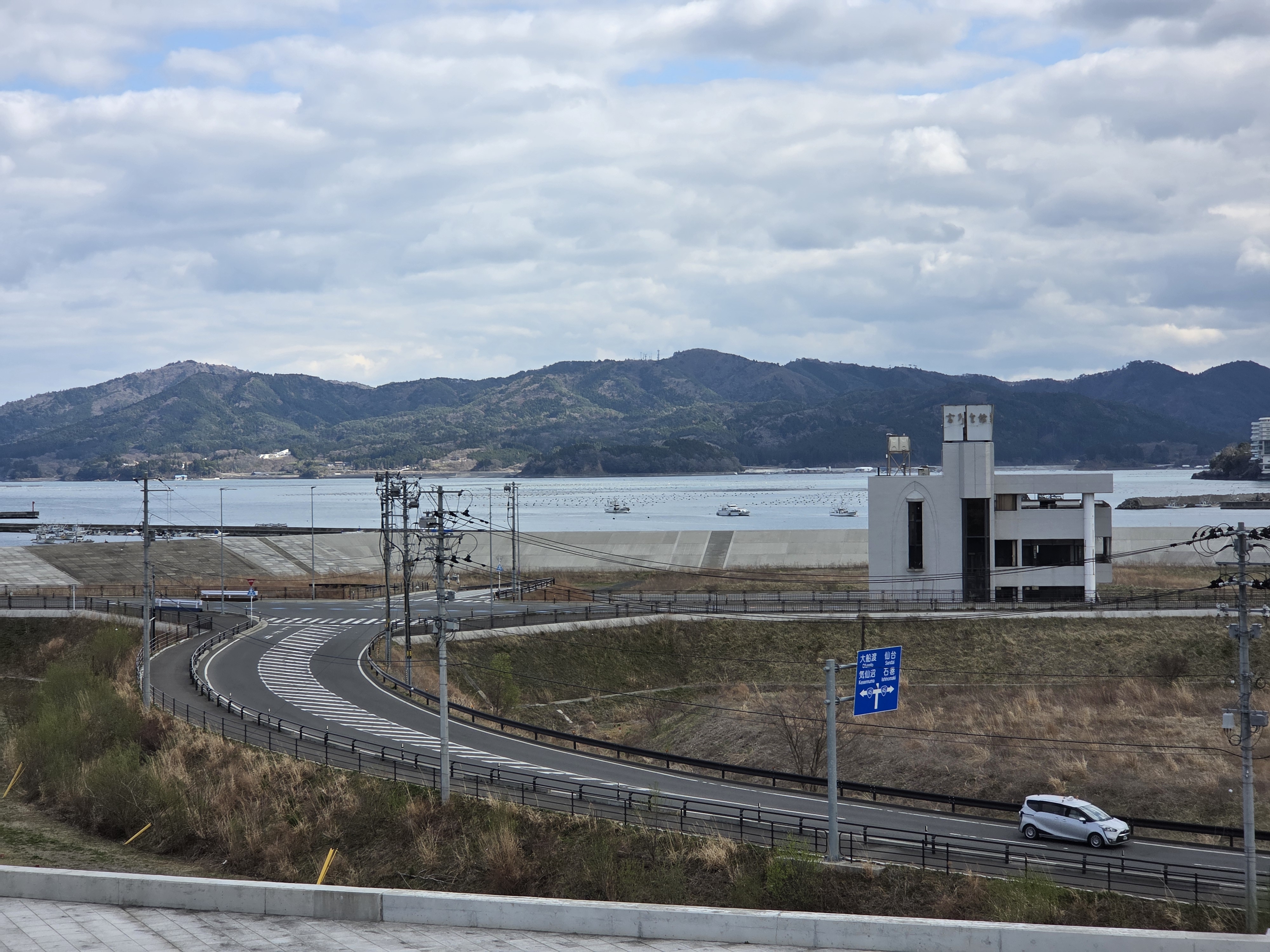
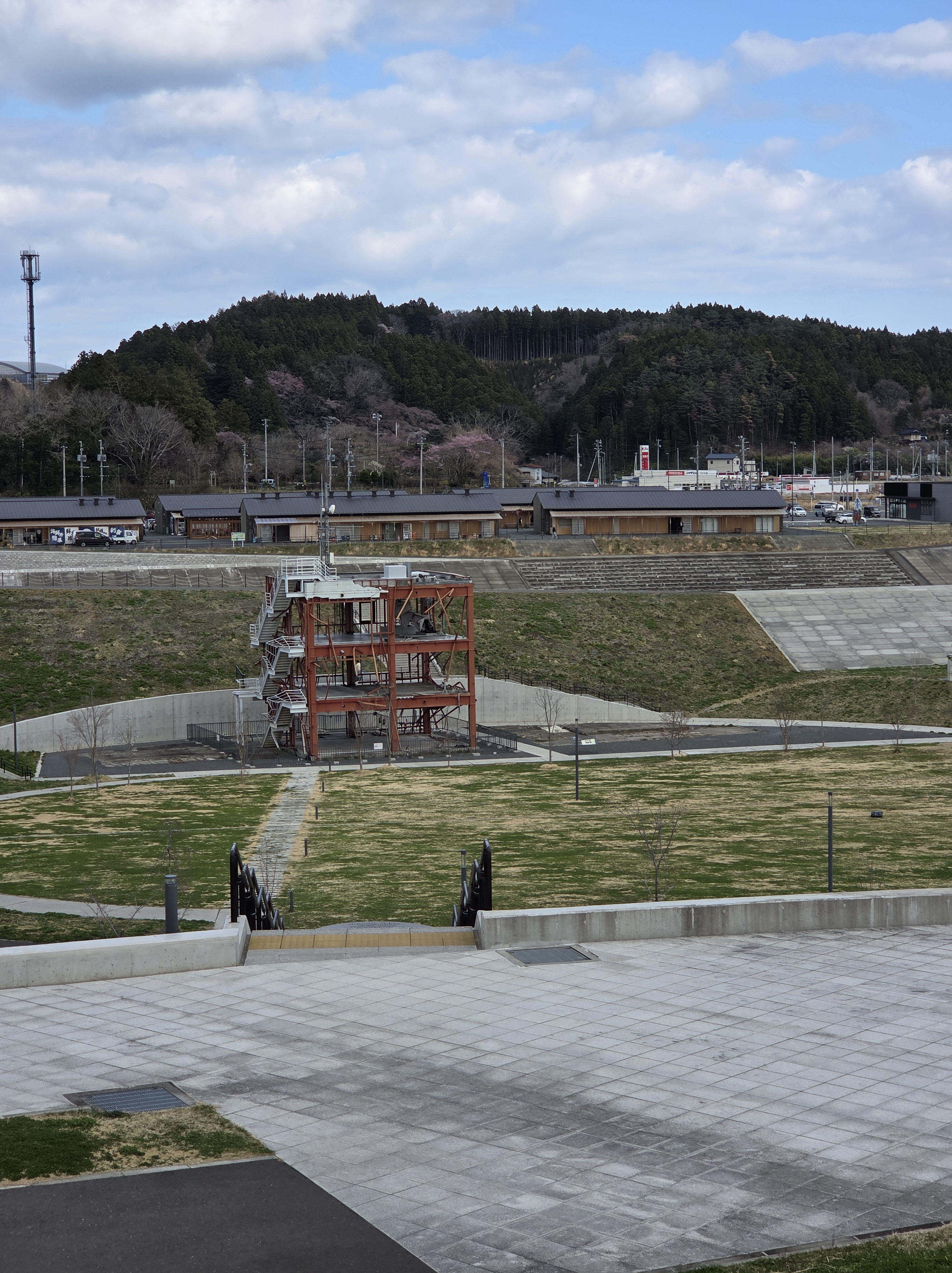
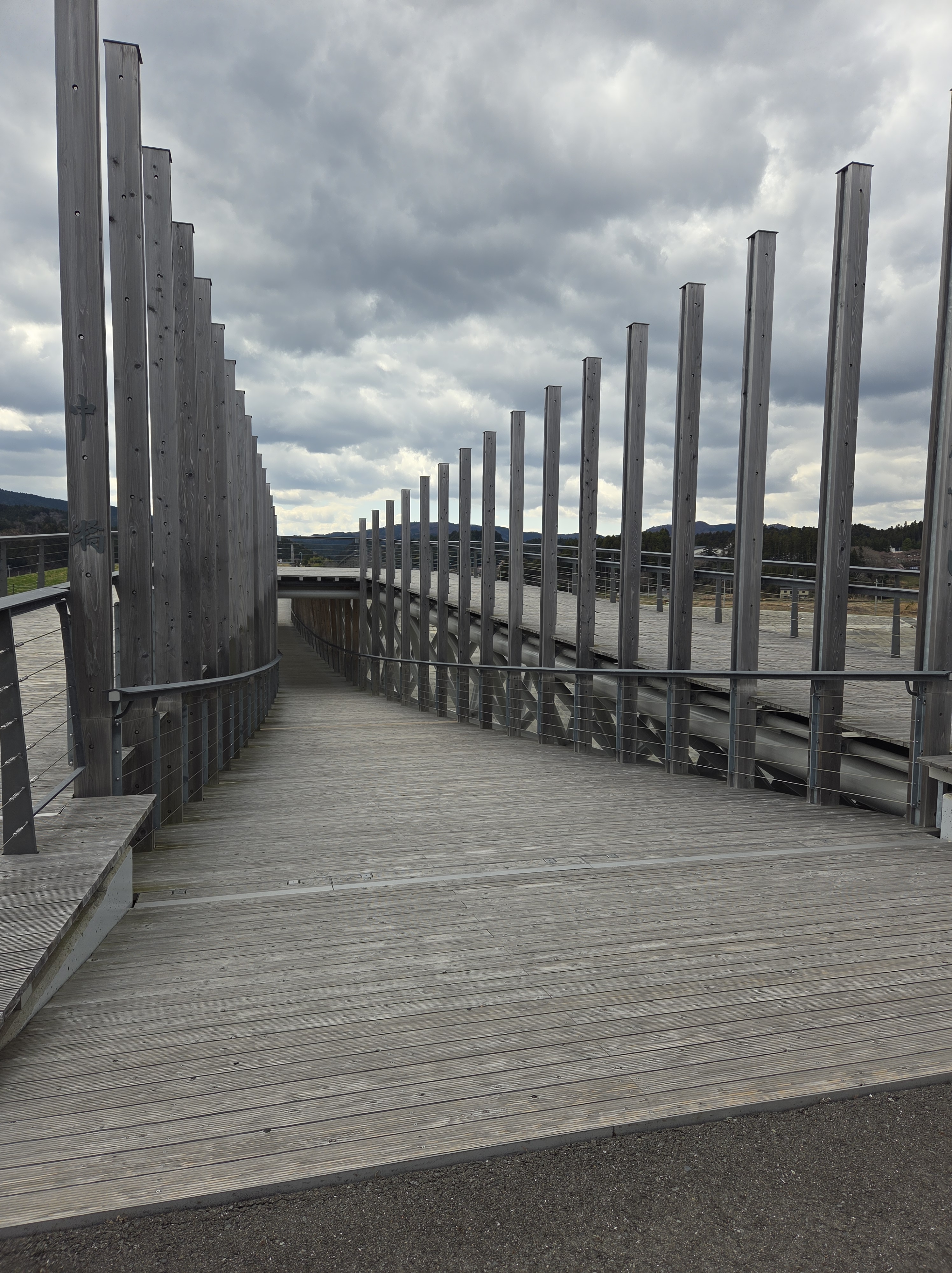
To access the park, you must cross the Nakabashi Bridge, an impressive structure made from cedar wood local to the area. Immediately on the other side is the Crisis Management Department building, now preserved as a historical site. Seeing it again was incredibly moving.
In the center of the park, the magnificent Hill of Prayer rises above the landscape. There are two paths to ascend the hill. The first, called the Path of Memory, is lined with pavers that recall the events of 3.11 in chronological order, from the initial earthquake to the tsunami. The second, the Path of Height, wraps around the hill at 16.5 meters above sea level, the height of the tsunami that emerged from Shizugawa Bay. Walking along this road, we were struck by the immense power and scale of the tsunami.
Atop the Hill of Prayer lies a stone monument to the 804 townspeople who perished during the disaster. Its inscription translates to, “Now, I pray to the azure sea, my beloved, that you may rest in peace.”
Our friend took us to the museum next to the park, and we climbed the stairs to the observation deck. Standing there, overlooking the land, river, and the distant sea, a feeling of hope swelled within me. Everything I saw that day was a testament to the indomitable human spirit. From moments of glorious triumph to tragedies of unspeakable magnitude—I realized, with profound certainty, that when people join forces, they can truly accomplish anything.
Never Forget 3.11
Much like the Minamisanriku Earthquake Reconstruction Memorial Park, Heroes Comeback is a lasting tribute to all whose lives were forever impacted by the Great East Japan Earthquake Disaster. It’s a monument to those who lost their lives, to those who who jumped into action in the aftermath, to those who extended a helping hand in every way they could, and to those who, in themselves, became heroes.
To Fujihiko Hosono, I say: mission accomplished.
3.11 wo Wasurenai Tame ni Heroes Comeback is no longer in print, but copies can be found in Japanese used bookstores and online marketplaces.
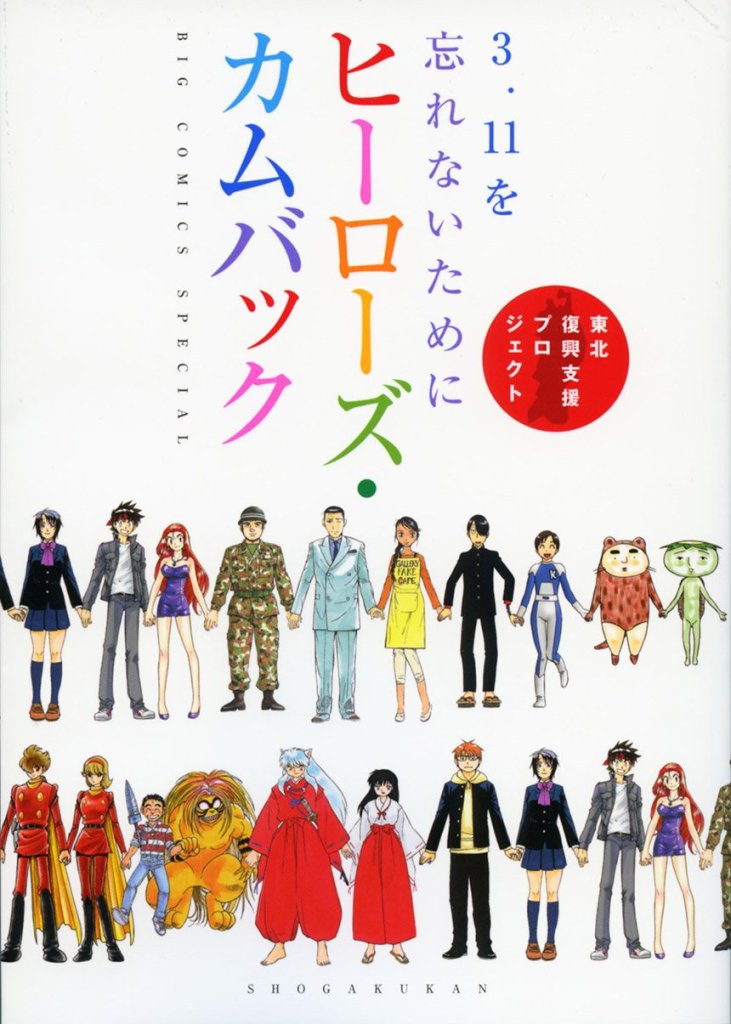
3.11 wo Wasurenai Tame ni Heroes Comeback
Original Title: 3.11を忘れないために ヒーローズ・カムバック
Author: Various
Publisher: Shogakukan
Release Date: 4/30/2013
Purchase: Amazon Japan (used)
From the publisher: 懐かしのヒーローたちが東北のために復活!
大震災後、被災地でのサイン会に参加したり漫画単行本を送ったりと、チャリティー活動を経験した漫画家・細野不二彦が、「漫画家なら漫画を描くことで貢献したい」との思いから、大震災からの復興支援と「3.11を忘れない」ために、かつての人気キャラクターたちが復活するという企画を提案。その思いに賛同した8人の人気漫画家たちにより、ビッグスピリッツ・少年サンデー・ゲッサンのコミック3誌に『ギャラリーフェイク』『サイボーグ009』『うしおととら』『犬夜叉』『銀の匙SilverSpoon』など、大ヒット作の新作読み切り8作品が掲載されました。その復興支援読み切りシリーズ「ヒーローズ・カムバック」と、2012年3月発売のビッグコミックに掲載された震災を題材にしたかわぐちかいじの『俺しかいない~黒い波を乗り越えて~』を併載して単行本化。その必要経費を除くすべての収益と印税を寄付することで、復興支援の輪を広げるためのアンソロジー集です。参加した漫画家は、細野不二彦・ゆうきまさみ・吉田戦車・島本和彦(原作・石ノ森章太郎)・藤田和日郎・高橋留美子・荒川弘・椎名高志。特別ゲスト、かわぐちかいじ。
【編集担当からのおすすめ情報】
寄付先は、「漫画はそもそも子供たちのためのもの」「子供たちの元に本を届けたい」という漫画家たちの思いから、被災した子どもたちや学校に本を届ける活動を続けている「大震災出版復興基金」ならびに、岩手・宮城・福島の各県庁が主催する、震災遺児への育英基金に寄付いたします。

 Hakutaku
Leave a comment