
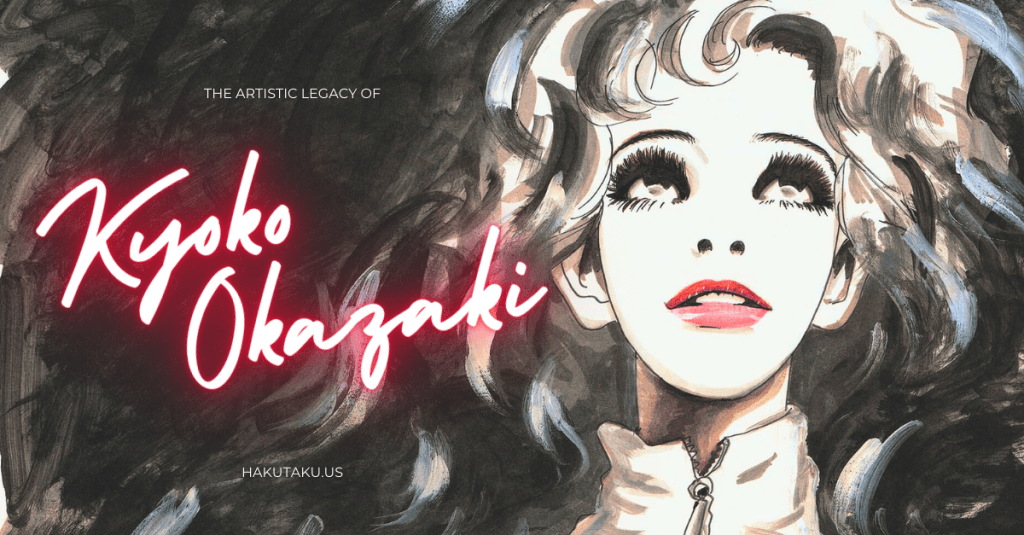
This post is part of the 30 Day Manga Challenge series. Day 9: Your Favorite Manga Aesthetic
Harsh contrasts of black and white magnifying expanses of negative space. Loose penwork applied with reckless abandon. Lavish models drawn in the finest caricature of high fashion. Such are the hallmarks of Kyoko Okazaki, one of the most avant-garde mangaka of the late 20th century.
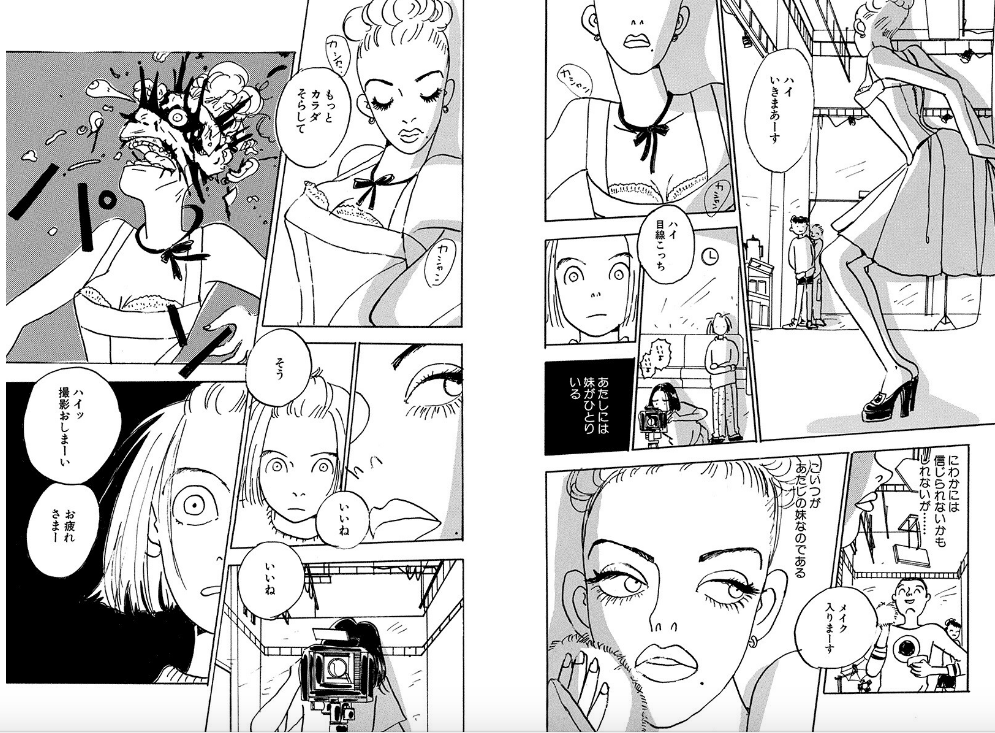
From the start of her career, Kyoko Okazaki firmly set herself apart from her contemporaries. In 1983, fresh out of college, Okazaki made her debut in Manga Burikko, a hentai anthology magazine led by then editor-in-chief, Eiji Otsuka. Okazaki’s brutally honest work quickly stood out against the magazine’s erotic, male-driven fare. Her success inspired budding mangaka Erica Sakurazawa and Moyoco Anno to join the industry. Their collective work produced in this decade marked the start of the modern josei manga genre.
The second half of the 1980s were a busy time for Okazaki. She published six major works, including Boyfriend is Better (1985) and Take It Easy (1986), in a variety of publications. Lots of her minimalistic illustrations drawn around this time emulate that of another 80s artistic icon, Patrick Nagel, though without the polish and gloss of his high-beauty portraiture.
In 1989, right before Japan’s bubble economy burst, Okazaki published Pink, a witty story about a young office worker who moonlights as a Tokyo call girl in order to support her pet crocodile. The outlandish but realistic takes on a capitalist society and contemporary consumerist culture made Pink a hit. Okazaki would later attack the 1980s, highlighting the era’s moral degradation in a 1991 essay: “Romantic feelings toward decadence. The comfort of regressing. Wistfulness toward being materialized.”
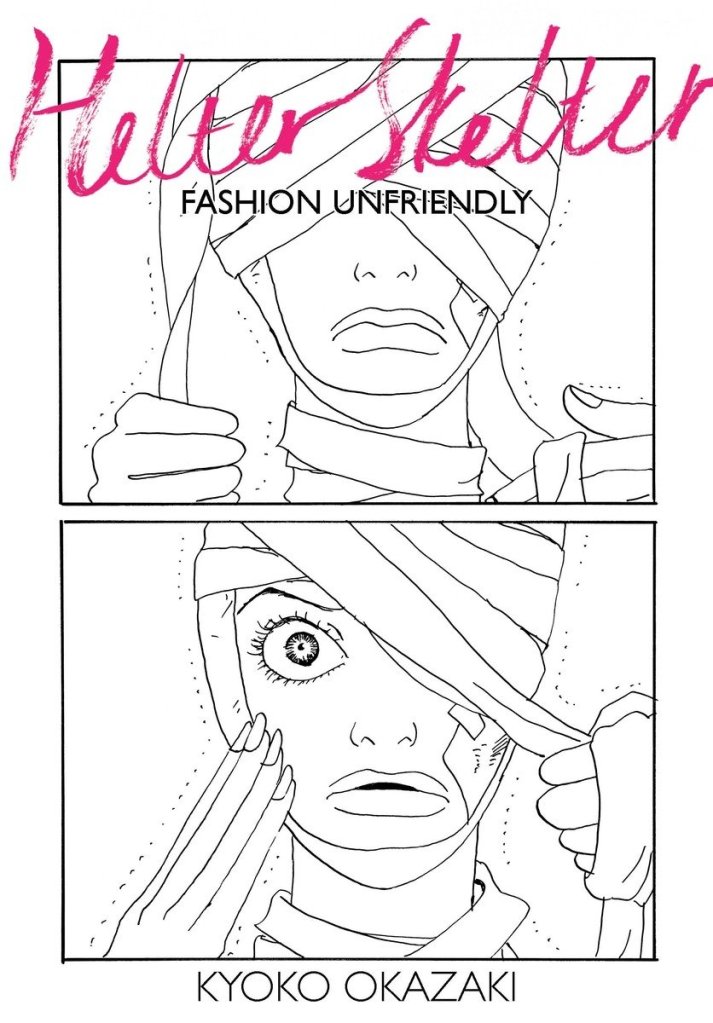
Her vicious critique of Japanese society would continue well into the 1990s, brewing in 1993’s River’s Edge and ultimately culminating in Helter Skelter (1995), considered her magnum opus among many fans. Both series encapsulated the anguish and loneliness felt throughout Japan post-burst. River’s Edge explores the hardships faced by teenagers in a Tokyo suburb, tackling subjects such as extreme bullying, homosexuality, eating disorders, and death.
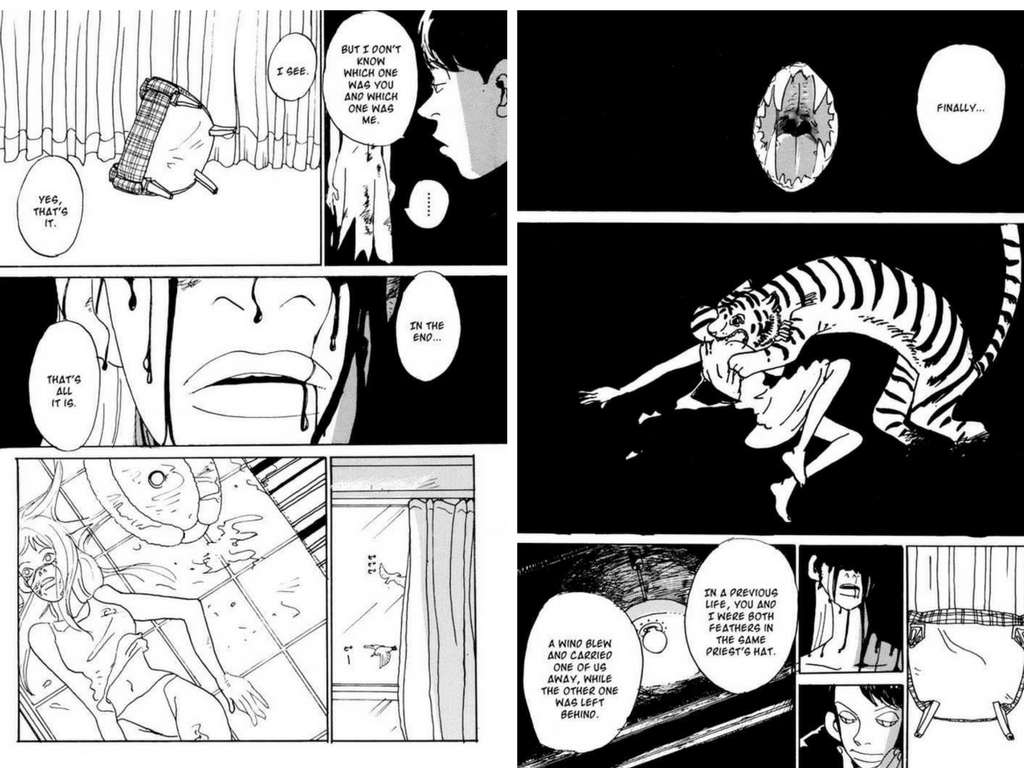
Helter Skelter, on the other hand, completely skewers celebrity worship, media sensationalism, and the pursuit of unattainable beauty. It follows the story of Liliko, a model who, after tons of plastic surgery, has reached the top of her game. But she quickly realizes just how fast fame can fade away, as her beautiful body—and warped mind—literally start breaking apart.
No matter how hard they try and create this so-called “other world,” doesn’t it just get tossed out and forgotten in no time? Maybe a few weeks for posters? A month for magazines? Half a year for CDs? What about books? A year? Two years? Three? Well?! They just all end up in the trash!
Liliko, Helter Skelter
In a sick twist of fate, life imitated art. During May of 1996, Kyoko Okazaki was struck by a drunk driver. Despite hints at her recovery over the years, this accident has effectively ended her career.
Though it’s unclear if she’ll create manga again, Kyoko Okazaki continues to inspire readers from all cultures. Her unabashed attitude and eclectic style prove that with enough tenacity, we too can craft our own perfection in an imperfect world.
Notable Works Available in English
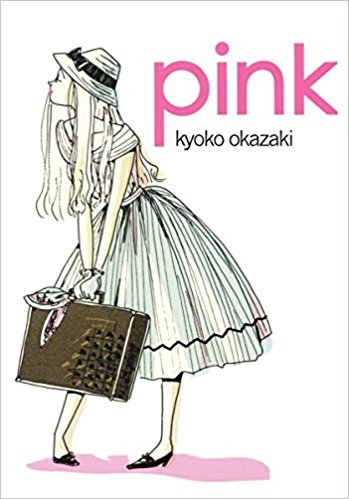
Pink
Original Title: ピンク
Serialization: Newパンチザウルス (New Punch Zaurus)
JPN Publisher: Magazine House (1989)
US Publisher: Vertical, Inc. (2013)
Purchase: Amazon
From the publisher: Yumiko moonlights as a call girl because her day job doesn’t pay enough to feed her pet Croc. Haru an aspiring writer who has nothing to say, sleeps with a woman his mother’s age not just for the money but to work on his “powers of observation”. So when Yumi’s step-mom turns out to be Haru’s sugar-mommy, it is time for shenanigans. A little bit of drinking, a little bit of blackmail and a visit with Croc is enough to change lives and maybe add some color to a comfortable but bland life.
Helter Skelter
Original Title: ヘルタースケルター
Serialization: Monthly Feel Young
JPN Publisher: Shodensha (1995)
US Publisher: Vertical, Inc. (2013)
Purchase: Amazon
If you are aware of fashion in Japan you must have seen Liliko’s face. For the last few years she has been at the top of the modeling world, with her face and body promoting the biggest brands. But as everyone who is in this world admits, staying on top is a constant and never ending battle. There are always new faces introduced to the public. Younger models and new looks are brought into the fold every season. And keeping that position means learning to adapt and learning to cope with change.
To maintain her position Liliko has decided to under the knife. This is not her first go with this service. It is yet another round of plastic surgery, all done to keep herself looking young and vibrant. However in this case just a little nip and tuck was not enough. Liliko is bent on undergoing a full body makeover. From head-to-toe, every inch of her will undergo cosmetic surgery, and thus begins her madness.


 Hakutaku
Leave a reply to Fae Hunt Cancel reply